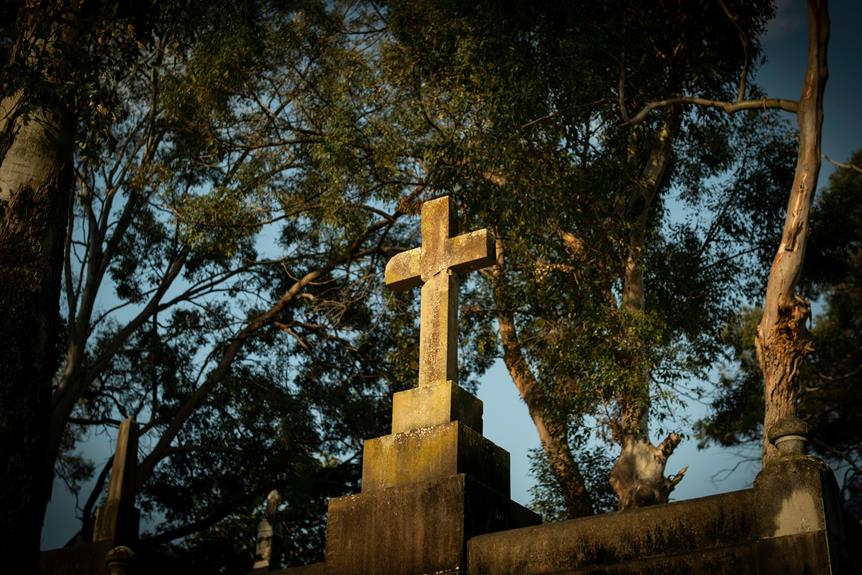
When you think about grave headstones, you're considering more than just a marker for a grave; you're recognizing a profound symbol of remembrance and respect. These monuments have evolved from simple stones to elaborate designs, reflecting both cultural values and personal stories. The choice of materials, like granite or marble, adds to their lasting presence. But what makes a headstone truly significant? It's the emotional weight they carry, bridging the gap between the living and the departed. How do different cultures and artistic styles shape these powerful memorials?
Historical Evolution
Grave headstones have a long and fascinating history that reflects humanity's deep-seated need to remember and honor the dead. In ancient burial practices, people used simple markers like stones or wooden plaques. These early memorial practices evolved over time, incorporating symbolic meanings that varied across different cultures. For instance, ancient Egyptians used elaborate tombs, while the Greeks and Romans favored inscribed marble slabs.

You'll find that regional variations markedly influenced the development of headstones. In Europe, headstones often featured intricate carvings and religious influences, like crosses or angels, reflecting the dominant Christian beliefs. Asian cultures, meanwhile, integrated Buddhist or Taoist symbols into their memorials.
Modern preservation techniques guarantee these historical markers stand the test of time, preserving their intricate details and inscriptions.
The evolution of inscriptions is another fascinating aspect. Early inscriptions were basic, often just a name and date. Over time, they became more elaborate, including epitaphs and personal messages, which add a deeper layer of connection and remembrance.
Modern preservation techniques guarantee that these historical artifacts withstand the test of time. Understanding the historical evolution of grave headstones helps you appreciate how funerary customs and the desire to honor loved ones have shaped these enduring symbols of memory and respect.
Cultural Significance
Understanding the historical evolution of grave headstones offers a rich context for appreciating their cultural significance. By recognizing how these markers have changed over time, you can better understand their role in various memorial practices.
Grave headstones are more than mere stone; they're cultural symbols that reflect the values, beliefs, and histories of different communities. When you visit a cemetery, you're not just seeing a collection of stones; you're witnessing a tapestry of traditions and emotions. Each headstone tells a story, representing the deceased's life and the cultural norms of the time. In some cultures, elaborate carvings and inscriptions are used to honor the dead, while others may favor simplicity, reflecting humility or spiritual beliefs. Understanding types of grave markers can further enrich your appreciation of these cultural symbols.
You play a significant role in preserving these practices. By respecting and maintaining grave headstones, you honor the memory of those who've passed and the cultural symbols they represent.
It's a way of connecting with the past and ensuring that future generations can learn from and appreciate these memorial practices. Ultimately, your actions help keep these traditions alive, fostering a deeper communal bond and a richer understanding of our shared heritage.
Artistic Designs
When you explore the domain of artistic designs in headstones, you'll discover an incredible variety of expressions that go beyond mere functionality. Each headstone can be a canvas for honoring a loved one's memory through symbolic motifs and intricate engraving techniques. You have the opportunity to create something deeply personal and meaningful.
Symbolic motifs can range from religious icons to nature-inspired elements like flowers and trees, offering a way to capture the essence of the individual being commemorated. For instance, a dove might symbolize peace, while an oak tree could represent strength and endurance. By choosing the right symbols, you can convey a heartfelt message that resonates with those who visit the grave.
Engraving techniques add another layer of personalization. Traditional hand-carving allows for unique, custom designs that can include anything from detailed portraits to poetic inscriptions. Modern laser engraving techniques offer precision and the ability to include photographs or intricate patterns. Each method has its own unique advantages, allowing you to choose the best way to memorialize your loved one.

Your thoughtful decisions in artistic design can transform a headstone into a lasting tribute that speaks volumes about the life it commemorates.
Material Choices
Choosing the right material for a headstone is essential in ensuring its durability and aesthetic appeal. You want a headstone that not only honors the memory of a loved one but also stands the test of time.
Granite is a popular choice due to its exceptional durability. It resists weathering and maintains its appearance for decades, making it a reliable option.
For those who prioritize beauty, marble offers unmatched aesthetics. Its natural veining and smooth finish create an elegant look; however, it's worth noting that marble is more susceptible to weathering over time compared to granite.
If you're considering ease of maintenance, bronze might be the best choice. Bronze headstones develop a unique patina but require regular cleaning to prevent tarnishing. They offer a timeless appearance and are relatively easy to care for.
Slate is another option, known for its affordability and historical charm. Slate headstones can be a cost-effective solution, though they mightn't withstand the elements as well as granite.
Lastly, limestone offers a soft, classic look but is more prone to weathering. It might be suitable for sheltered or less harsh environments where its natural beauty can be preserved.
Emotional Impact
The sight of a beautifully crafted headstone can evoke powerful emotions, serving as a tangible connection to the memory of a loved one. In moments of profound loss, you might find solace in visiting the grave, where the headstone stands as a reflection of a life lived and loved.
It's not just a marker; it's a place where grief expression and memory preservation come together. This can be similar to how unique funeral flower arrangements capture the essence of the deceased, enhancing the memorial experience.
Creating a headstone that reflects the personality and spirit of the deceased can help you and others feel a sense of closeness, even in their absence. Each inscription, symbol, and design choice can speak volumes, allowing you to share stories and memories that keep their legacy alive.
This process can greatly aid in your journey through grief, giving you a focal point for reflection and remembrance.
As someone who wishes to serve and support others, you may recognize the importance of providing options that honor individuality and celebrate life. By understanding the emotional impact of a headstone, you can offer compassionate guidance to those traversing their grief.
Ultimately, a thoughtfully designed headstone becomes a beacon of love, encapsulating cherished memories for generations to come.
Conclusion
In choosing a grave headstone, you're not just selecting a marker, but crafting a timeless masterpiece that will echo through the ages. These sacred monuments encapsulate rich histories, cultural values, and personal legacies with every chiseled detail and material choice. They provide a heartwarming connection to your loved ones, keeping their memories alive and close. Ultimately, a headstone is more than stone—it's an eternal tribute, a way to guarantee that your loved one's story is never forgotten.