Funeral traditions vary widely across cultures, each offering unique ways to honor the departed. In Mexico, the Day of the Dead features vibrant ofrendas with marigolds and sugar skulls, celebrating ancestors' lives. Irish wakes emphasize storytelling and music to remember loved ones, fostering community ties. Ghanaian fantasy coffins, shaped like fish or airplanes, reflect personalities and aspirations. Tibetan sky burials offer bodies to vultures, signifying the soul's release, while South Korean burial beads turn ashes into colorful keepsakes. Japanese Buddhist funerals focus on guiding spirits with chanting and incense. Exploring these customs reveals deep cultural connections to life's final farewell.
Mexican Day of the Dead
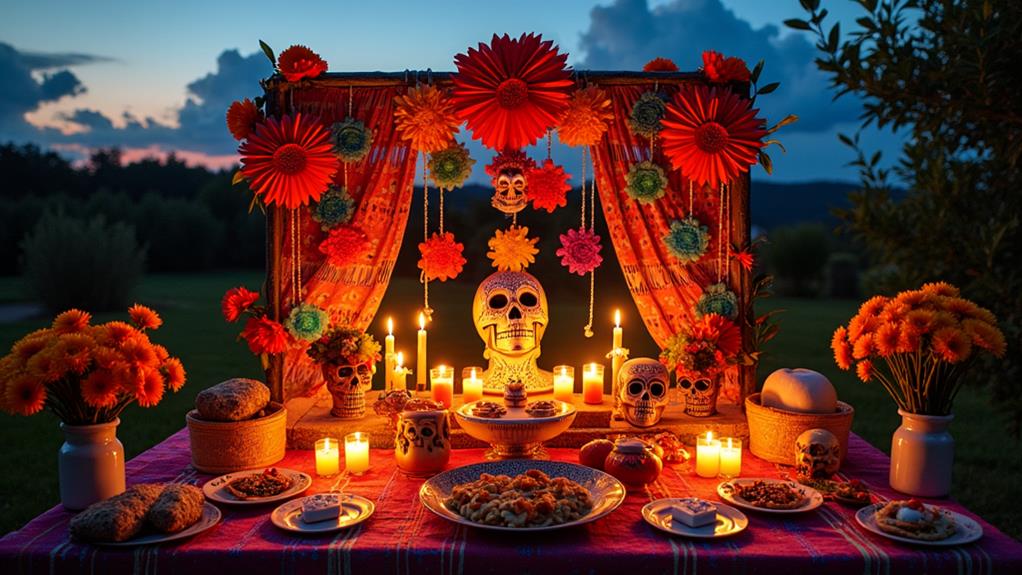
As you explore the rich tapestry of the Mexican Day of the Dead, you'll find it's a vibrant celebration of life and death, blending indigenous practices with Catholic traditions.

Central to this celebration is the creation of ofrendas, or family altars, adorned with marigolds, sugar skulls, and Catrina figures. These elements each carry deep symbolism. Marigolds, known as the flower of the dead, guide spirits back to the world of the living with their vibrant color and scent. Sugar skulls and Catrina figures serve as reminders of mortality, blending humor and reverence in the rituals of remembrance.
Your role in participating or organizing a Day of the Dead celebration involves understanding the spiritual beliefs that underscore these practices. The ofrendas creation is a communal activity, often involving the entire family and sometimes the broader community, fostering a sense of unity and shared cultural heritage.
Through these gatherings, you help sustain traditions and provide comfort to those who mourn, reinforcing the bond between the living and the deceased. By honoring ancestors and celebrating their lives, you contribute to a profound cultural practice that emphasizes remembrance, respect, and continuity across generations.
Buddhist Funerals in Japan
Shifting our focus from the colorful festivities of the Mexican Day of the Dead, we encounter the serene and contemplative nature of Buddhist funerals in Japan. Central to these ceremonies are Buddhist practices and Japanese rituals that honor the deceased while guiding their spirit to the afterlife.
You'll find that spiritual beliefs deeply influence mourning customs, emphasizing the impermanence of life and the continuation of the soul's journey. Family involvement is essential. Relatives gather to perform rites that include chanting sutras and offering incense, integral to funeral symbolism. These acts not only show respect but also aid the departed on their spiritual path.
In Japan, cremation traditions dominate; the body is cremated, and the ashes are placed in a family grave or urn. This reflects the cultural and religious importance of purity and transformation.
In addition to traditional rites, unique funeral flower arrangements add a personal touch to the ceremonies, often chosen to capture the essence of the deceased.
Memorial services, known as "hotsuke," occur periodically, extending for years to secure the deceased's peaceful passage. These services blend solemnity with a profound sense of community and continuity.
Ghanaian Fantasy Coffins
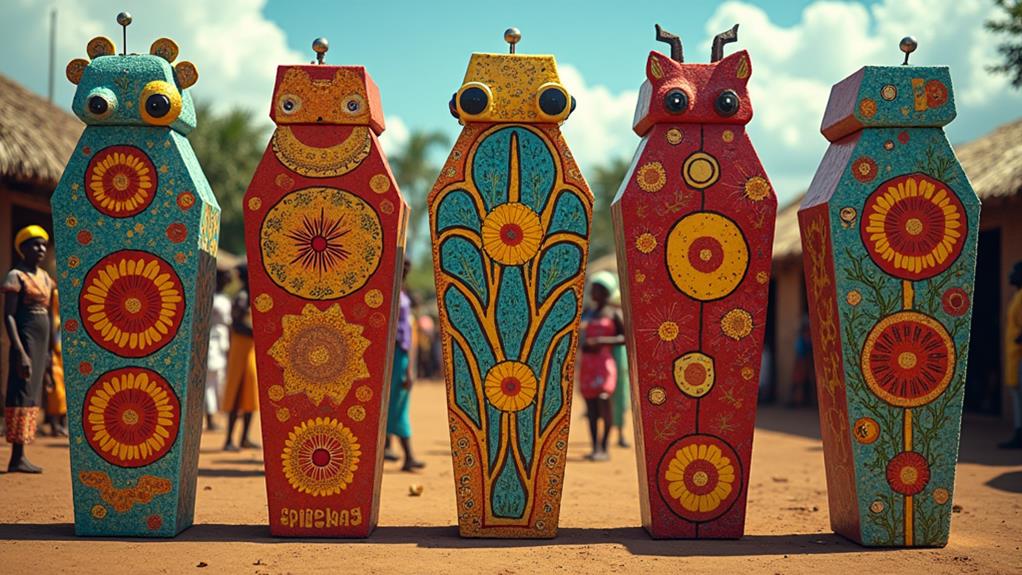
Ghana's unique funeral traditions offer an intriguing glimpse into the vibrant culture of this West African nation, particularly through the art of fantasy coffins.
These elaborately designed coffins aren't just burial vessels; they're a reflection of Ghanaian artistry and the deeply symbolic practices that honor the deceased. Imagine coffins crafted in the shapes of fish, airplanes, or even sneakers—each design chosen to reflect the personality, profession, or aspirations of the departed.
You can see how these coffins serve a dual purpose: they celebrate life while easing the community's grief. The craftsmanship involved is meticulous, often requiring months to complete. This isn't just about aesthetics; it's a profound form of coffin symbolism. For instance, a fisherman might be buried in a fish-shaped coffin, signifying his life's work and connection to the sea.
Comparatively, these coffins contrast sharply with the more somber, uniform caskets seen in many Western cultures. They offer a personalized, vibrant farewell that aligns with Ghanaian beliefs about the afterlife.
Tibetan Sky Burials
While Ghanaian fantasy coffins celebrate individuality through vibrant artistry, Tibetan sky burials offer a strikingly different yet equally profound approach to honoring the deceased.
Rooted in Tibetan beliefs, sky burial practices reflect a deep spiritual symbolism and a profound connection to nature. In this ritual, the body is offered to vultures, symbolizing the soul's release and aiding its celestial journey.
By participating in sky burials, you're embracing the idea that life and death are interconnected cycles. The ritual significance lies in transforming the physical body into a body offering for scavenging birds, which are seen as sacred. This act guarantees the deceased's spirit ascends and continues its journey, reinforcing the belief in impermanence and rebirth.
Community involvement is essential in these ceremonies. Monks chant prayers, family members assist, and the community gathers to support the soul's passage. The process is both a communal act of service and a deeply personal farewell, emphasizing the interconnectedness between individuals and their environment.
Sky burial practices exemplify how Tibetan culture views death not as an end, but as a passage, deeply intertwined with nature and spiritual beliefs.
Irish Wake Traditions

In Irish wake traditions, you'll notice that gathering and storytelling rituals play a central role, offering solace and a sense of community.
Music and singing customs are equally significant, transforming these wakes into poignant celebrations of life that contrast with the solemnity of other cultural practices.
When you compare these elements to Tibetan sky burials, the communal and celebratory aspects of Irish wakes reveal a unique approach to mourning and remembrance.
Gathering and Storytelling Rituals

The Irish wake, an age-old tradition, stands as a profound tribute to the importance of community and storytelling in the grieving process. You'll find that this unique custom offers a space for grief expression, allowing mourners to share their sorrow openly.
Central to the wake is the gathering of friends and family in the deceased's home, creating a setting where memories and stories flow freely. This communal bonding provides emotional support, reinforcing the collective strength of the community during times of loss.
When you attend an Irish wake, you're invited to participate in a rich tapestry of storytelling. Relatives and friends recount tales of the deceased's life, highlighting their virtues, eccentricities, and memorable moments. Each story serves as a thread, weaving together the fabric of the person's legacy.
This ritual not only honors the departed but also helps those left behind to process their grief and find solace.
Comparatively, the storytelling aspect of the Irish wake is unique in its emphasis on communal participation. In other cultures, storytelling might be more formalized or reserved for specific individuals. However, the Irish approach encourages everyone to contribute, fostering a deep sense of connection and shared remembrance.
Music and Singing Customs
Among the many cherished traditions of an Irish wake, music and singing hold a special place, seamlessly blending into the fabric of the gathering. When you attend an Irish wake, you'll witness sacred hymns and communal singing that create an atmosphere of unity and solace. These musical offerings aren't just for mourning but also for celebrating the life of the departed.
You'll hear instrumental tributes, often played on traditional Irish instruments like the uileann pipes or the fiddle. These musical offerings can evoke profound emotions, touching the hearts of everyone present. Lamentation songs and dirge performances serve as poignant expressions of grief, while ritual chants and cultural anthems reinforce the community's shared heritage and values.
Folk melodies, rich in history and sentiment, often fill the air, reminding everyone of the deceased's life and the communal bonds that tie them together. Sacred performances aren't just acts of remembrance but also of spiritual significance, offering comfort and hope.
South Korean Burial Beads
In South Korea, you'll encounter the unique tradition of transforming the deceased's remains into colorful burial beads.
This practice not only honors ancestral spirits but also serves as a tangible way for families to keep their loved ones close.
Transformation Into Beads
South Korean burial beads, a unique and intricate funerary tradition, offer a fascinating example of how modern innovations can intersect with cultural practices. This practice transforms the ashes of the deceased into smooth, colorful beads, which are then kept as memorial jewelry. The bead symbolism in this tradition is profound, representing continuity, remembrance, and the eternal bond between the living and the departed.
You'll find this process starts with cremation. The ashes are then subjected to high-pressure and high-temperature treatment, turning them into glass-like beads. These beads vary in color, often appearing in shades of blue, pink, or even black. Each bead becomes a tangible connection to the deceased, a physical manifestation of memory and love.
From an ethnographic perspective, this tradition reflects South Korea's adaptation of contemporary technology within their cultural framework. Unlike the Western practice of keeping ashes in urns, these beads allow for a more personal, portable form of remembrance.
This comparative approach highlights how different cultures innovate to honor their dead while retaining deep, symbolic meaning. For those who serve others, understanding such practices can enrich your ability to offer compassionate, culturally sensitive support in times of grief and loss.
Honoring Ancestral Spirits
Honoring ancestral spirits through South Korean burial beads extends this unique tradition into a profound domain of cultural reverence. In South Korea, transforming the ashes of the deceased into colorful beads isn't just an aesthetic choice; it's a deeply symbolic act of ancestral worship. These beads often become cherished family heirlooms, serving as tangible reminders of loved ones who've passed. By keeping these beads in the home, families can more easily include their ancestors in daily rituals and spirit offerings, reinforcing a continuous bond between the living and the dead.
From an ethnographic perspective, this practice aligns with broader East Asian customs of honoring ancestors, yet it stands out for its innovative approach to memorialization. Instead of traditional graves or urns, the beads offer a portable and visually appealing alternative that integrates seamlessly into modern living spaces.
This method reflects a comparative adaptation to urbanization and limited burial space, addressing practical concerns while maintaining cultural integrity.
For those dedicated to serving others, understanding this tradition provides valuable insights into the evolving ways communities honor their dead. It highlights the importance of adaptability in preserving ancestral worship practices, ensuring they're woven into the fabric of contemporary life.
Cultural Significance Explained
Through the lens of cultural significance, transforming ashes into beads in South Korea encapsulates a profound synthesis of tradition and modernity. This practice is deeply rooted in the spiritual beliefs and cultural rituals that reflect the nation's approach to mourning customs and death symbolism. By converting cremated remains into smooth, colorful beads, you participate in a memorial practice that honors the deceased's legacy while providing a tangible, beautiful way to express grief.
South Korea's burial beads are a modern evolution of traditional death rituals, allowing families to keep their loved ones close in a physical form. These beads serve not just as keepsakes but as symbols of a celebration of life, offering a unique method to navigate the sorrow of loss.
You'll find that this practice aligns with the broader shift towards more personalized and meaningful expressions of grief.
In a comparative sense, while Western cultures might focus on tombstones or urns, South Korean burial beads highlight a different cultural approach to legacy honoring. By embracing this practice, you acknowledge a blend of past and present, creating a lasting tribute that respects both ancient customs and contemporary needs.
Conclusion
In exploring global funeral traditions, you'll find a tapestry of unique practices, each rich with cultural significance. Consider this: in South Korea, over 50% of families choose to compress cremated remains into colorful beads, turning loss into art. These rituals, from Irish wakes to Tibetan sky burials, offer profound insights into how different societies honor life and death. Through these diverse lenses, you'll appreciate the universal human desire to commemorate loved ones in meaningful ways.