To clean and maintain a headstone, start by inspecting it for cracks or damage. Use soft brushes and pH-neutral cleaners, and avoid metal tools to prevent scratches. Identify the stone type; granite requires less care than marble. Test cleaning solutions on a small area first. Gently clean and rinse thoroughly, applying baking soda poultice for tough stains if needed. Regular bi-annual checks and biocide treatments enhance longevity. Explore further for in-depth maintenance strategies.
Assessing the Condition of the Headstone
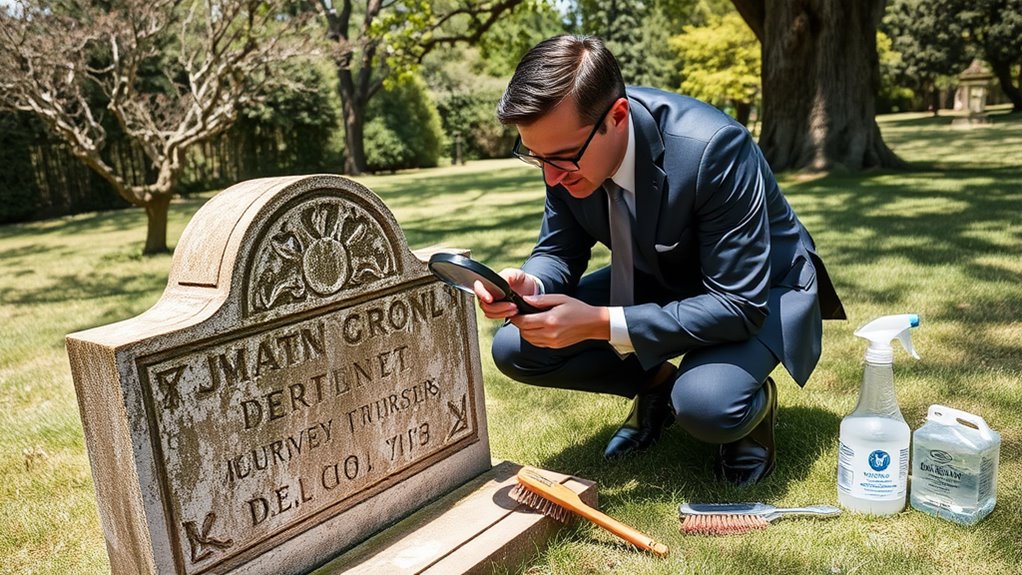
Before starting any cleaning process, it's essential to assess the condition of the headstone to guarantee you choose the safest and most effective methods.

Begin with a thorough headstone inspection, focusing on visible cracks, chips, or any signs of damage. Carefully examine the surface for biological growth or stains, which may indicate a need for specialized cleaning. Consideration of the stone type can influence the choice of cleaning materials, as different stones react differently to various cleaning agents and techniques.
Check the structural integrity by gently testing for movement or instability. Firmly secured headstones are safer to clean. Understanding these aspects will help you decide on appropriate techniques and prevent further damage. Affordable services like obituary writing can also provide support and ease during this emotional time.
Pay attention to inscriptions, as they can be more delicate. Document your findings, which will serve as a reference for future maintenance.
This methodical approach guarantees a respectful and effective cleaning process. Consider the significance of grave markers as they can provide insight into the appropriate care needed for different types of materials.
Selecting the Right Cleaning Tools and Supplies
Having assessed the condition of the headstone, it's important to choose the right cleaning tools and supplies to guarantee a safe and thorough cleaning.
Start with soft bristle brushes and non-metallic scrapers to avoid scratching the stone. Opt for pH-neutral cleaning solutions specifically designed for stonework, as harsh chemicals can cause damage. Always test any cleaning solution on a small, inconspicuous area first. Use plenty of clean water to rinse the headstone thoroughly. For those seeking assistance with memorials, consider eulogy writing services which offer support during mourning. Make sure you wear protective gear, such as gloves and goggles, to safeguard yourself from any irritants.
Microfiber cloths are excellent for drying and polishing the surface without leaving residues. By selecting appropriate tools and supplies, you'll preserve the headstone's integrity while achieving a respectful clean.
Understanding the Type of Stone Material
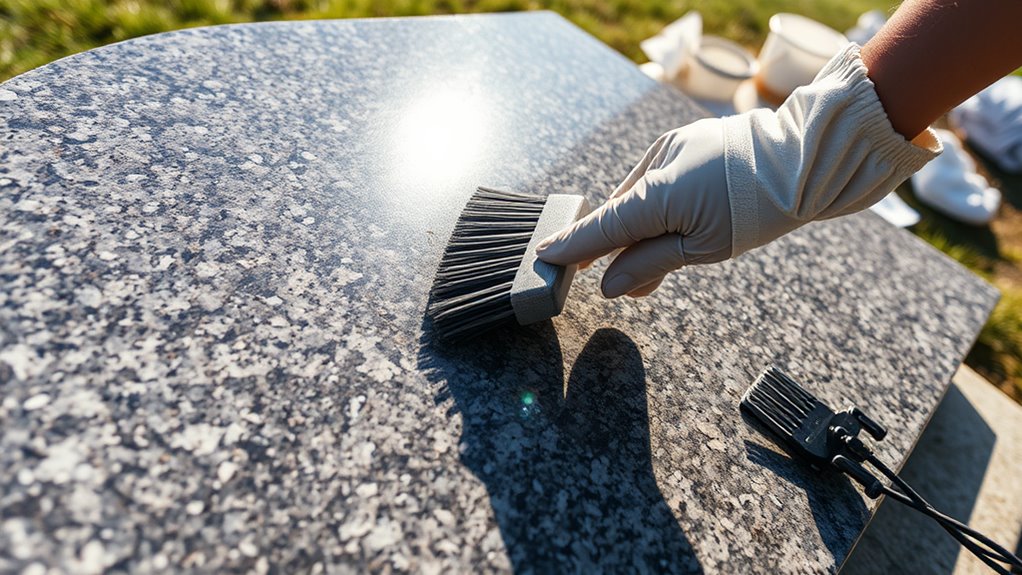
Before you start cleaning a headstone, it's essential to identify its stone variety, such as granite, marble, or limestone.
Each type has different characteristics, so evaluating the stone's durability will guide you in choosing the proper cleaning methods and products.
Identifying Stone Varieties
Understanding the type of stone material is crucial when it comes to cleaning and maintaining a headstone. First, identify whether the stone is granite or marble, as each has unique properties.
Granite characteristics include a dense, hard surface that's resistant to weathering and staining, making it easier to clean. Look for a speckled appearance with crystalline textures.
On the other hand, marble is softer and more porous, requiring specific marble care to avoid damage. It often has a smooth surface with veining patterns.
By recognizing these differences, you can choose the right cleaning methods and materials. Avoid using harsh chemicals on marble, as they can cause etching.
Understanding these distinctions helps preserve the integrity and appearance of the headstone.
Assessing Stone Durability
When evaluating the durability of a headstone, it is essential to contemplate the type of stone material used. Different stones react uniquely to environmental impact and stone weathering effects, which can influence longevity. Granite, marble, and limestone are common choices, each with distinct properties.
| Stone Type | Durability Level | Weathering Effects |
|---|---|---|
| Granite | High | Resistant to acids and weather |
| Marble | Moderate | Prone to acid rain, surface erosion |
| Limestone | Low | Highly susceptible to weathering |
Granite offers superior resilience, making it ideal for harsh environments. Marble, while beautiful, suffers more from acid rain and erosion. Limestone, though elegant, is least durable. Understanding these differences helps you select a headstone that withstands environmental challenges, ensuring a lasting tribute. Choose wisely based on your local climate and the stone's inherent properties.
Preparing the Headstone for Cleaning
Before you begin cleaning a headstone, gather the necessary supplies such as soft brushes, water, and a non-abrasive cleaner.
Carefully assess the headstone's condition to identify any cracks or areas that may require special attention.
Finally, remove any surface debris like leaves or dirt to guarantee a thorough and effective cleaning process.
Gather Necessary Supplies

To effectively clean and maintain a headstone, start by gathering all the necessary supplies, ensuring a smooth and efficient process.
Begin with a soft-bristle brush, perfect for gentle cleaning techniques without damaging the surface. You'll also need non-ionic soap; it's a safe choice that won't harm the stone.
A bucket for mixing the cleaning solution and a spray bottle for easy application are essential. Don't forget a supply of clean water for rinsing.
Gloves will protect your hands, while a soft cloth aids in gentle drying. Maintenance supplies like a plastic scraper come in handy for removing stubborn debris.
Finally, bring a tarp to protect surrounding areas. With these items, you're well-equipped for effective headstone care.
Assess Headstone Condition
Start by carefully evaluating the headstone's condition to ascertain you're approaching the cleaning process appropriately. Take note of any cracks, chips, or signs of weathering. This initial assessment helps preserve its historical significance and maintain emotional connections to loved ones. Look for biological growths, stains, or loose fragments that may indicate structural vulnerability.
Here's a quick guide:
| Aspect | What to Check For |
|---|---|
| Physical Damage | Cracks, chips, erosion |
| Biological Growth | Moss, algae, lichen |
| Material Integrity | Flaking, crumbling, stains |
Consider the material type, as marble, granite, and limestone require different care. Document any inscriptions or carvings before cleaning. Understanding the headstone's condition ascertains you use suitable techniques, preventing further harm and respecting its historical and personal value.
Remove Surface Debris
After evaluating the headstone's condition, focus on removing surface debris to prepare it for cleaning.
Begin with a soft-bristled brush or your hands—gloved, of course—to gently sweep away loose leaves, dirt, and twigs. This initial surface cleaning guarantees you don't scratch or damage the stone.
Pay attention to crevices and inscriptions where debris often accumulates. Use a plastic scraper for stubborn residues, like bird droppings or hardened grime, but avoid metal tools, as they can cause scratches.
If you're dealing with moss or lichen, lightly mist the area with water to soften it before removal.
Once debris removal is complete, the headstone will be ready for the next step in its care routine: thorough cleaning with appropriate solutions.
Safe Cleaning Techniques for Headstones
When it comes to cleaning headstones, a few essential techniques guarantee the task is done safely and effectively.
First, choose appropriate cleaning solutions to avoid damaging delicate stone surfaces. Opt for non-ionic detergents, which are gentle yet effective.
Second, employ preservation techniques to maintain the stone's integrity. Always test a small area first.
Here's a methodical approach:
- Dilute Cleaning Solution: Mix your chosen cleaner with water to minimize harsh effects.
- Soft-Bristled Brush: Use gentle brushes to scrub without scratching the stone.
- Rinse Thoroughly: Confirm no residue remains by rinsing with clean water.
- Dry Completely: Use soft towels to absorb moisture, preventing water damage.
Addressing Stubborn Stains and Growths
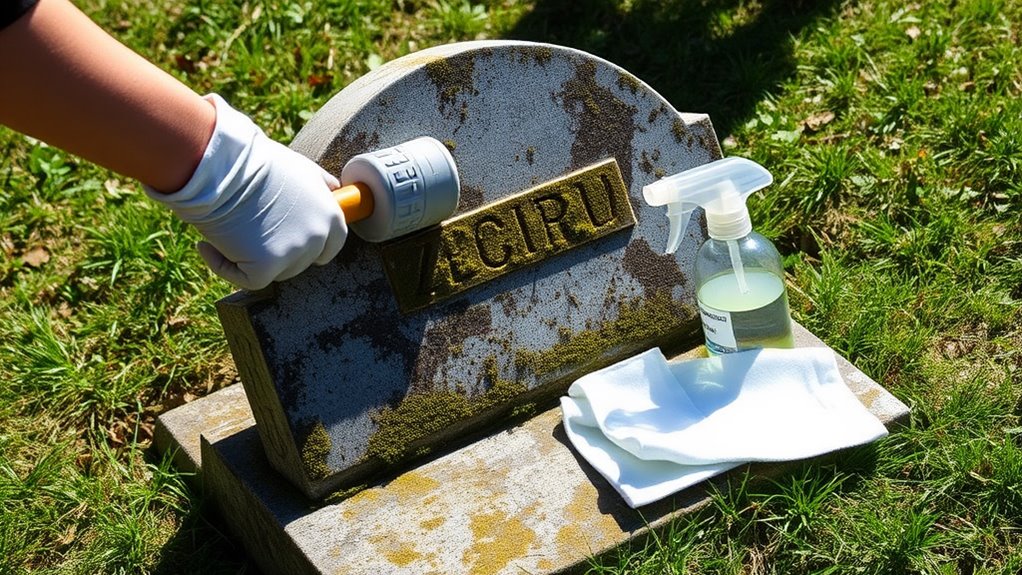
Even though you've taken care with gentle cleaning techniques, stubborn stains and biological growths can still mar a headstone's surface. To address these, focus on targeted mold removal and effective stain prevention. Use a soft-bristled brush and a non-ionic detergent to gently scrub away mold. Rinse thoroughly to prevent residue. For stubborn stains, consider a poultice paste made from baking soda and water. Apply it, let it sit, then rinse. Always test any product on a small area first.
| Issue | Solution |
|---|---|
| Mold growth | Soft brush, non-ionic detergent |
| Stubborn stains | Baking soda poultice |
| Rinse | Use clean water |
| Test products | Small, inconspicuous area first |
| Repeat if needed | Gentle persistence pays off |
These methods guarantee the headstone remains clean and respected.
Regular Maintenance and Preservation Tips
To guarantee a headstone remains in pristine condition, adopt a regular maintenance routine that not only preserves its appearance but also extends its longevity.
Consistent care involves understanding cleaning frequency and utilizing effective preservation methods. Here's a methodical approach:
- Cleaning Frequency: Assess the headstone's condition bi-annually. Adjust frequency based on local weather and environmental factors.
- Use Gentle Tools: Opt for soft brushes and non-abrasive cloths to avoid damaging the stone's surface.
- Preservation Methods: Apply a biocide treatment annually to deter moss and algae growth, ensuring the stone stays clear and clean.
- Inspect for Damage: Regularly check for cracks or erosion. Early detection helps in timely repairs, preventing further deterioration.
Conclusion
Just as a well-tended garden reflects the care of its gardener, a clean and maintained headstone honors the memory it holds. By choosing the right tools and techniques, you're not just cleaning stone; you're preserving stories etched in time. Addressing stains and safeguarding against nature's touch guarantees the legacy remains clear. Regular attention, like gentle rain on a flower, nurtures these monuments, allowing them to stand proud, whispering tales of those who came before.