A eulogy should generally last between five to ten minutes. This timeframe allows you to share meaningful anecdotes and express your gratitude without losing the audience's engagement. Consider the gathering's emotional state and cultural expectations, as these can influence the appropriate length. Aim for a balance of sorrow and celebration to honor the deceased's life. Focus on a few cherished memories to make it personal and heartfelt. Practicing your delivery will help you manage emotions and stay within the time limit. For more tips on crafting a poignant eulogy, continue exploring further details.
Factors Influencing Eulogy Length
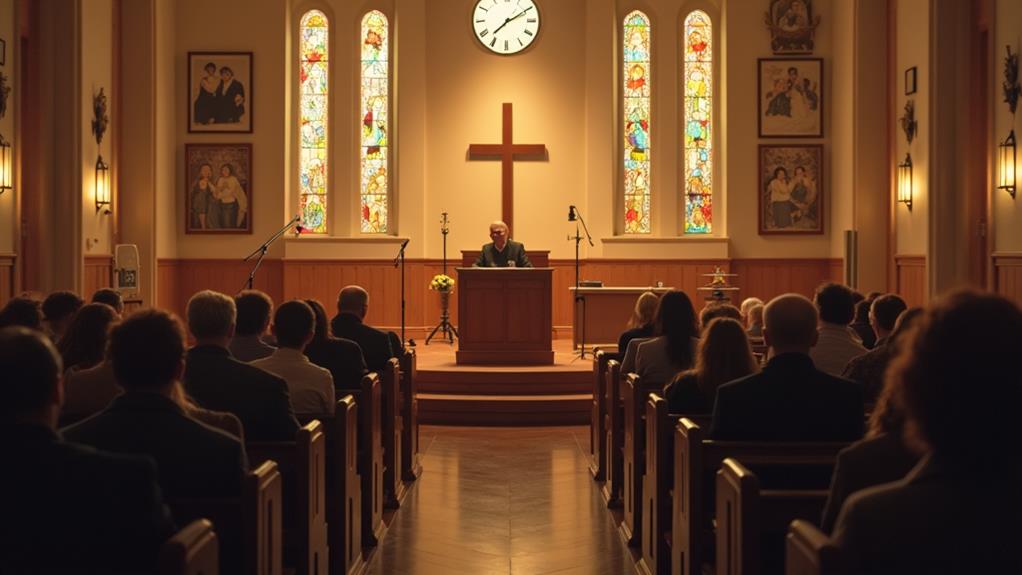
Several factors can influence the length of a eulogy, and considering them can help you craft a meaningful tribute. First, think about the personal anecdotes you want to share. These stories should highlight the character and values of the person you're honoring. Select a few impactful moments that encapsulate their essence without overwhelming the audience with too many details.

If you're struggling with finding the right words, consider affordable eulogy scripting services that can help you articulate your thoughts clearly and respectfully.
Next, take cultural considerations into account. Different cultures have varying expectations for eulogies. Some may prefer brief, poignant speeches, while others might expect more elaborate tributes. Understanding these nuances guarantees your eulogy respects the traditions and preferences of the community.
Also, consider the setting and the audience. A eulogy delivered in an intimate family gathering might differ in length from one given at a large public memorial. Gauge the emotional state of the attendees; a lengthy eulogy might be too taxing for those grieving deeply.
Lastly, coordinate with other speakers. If you're one of several, ensure your speech complements rather than duplicates others.
Average Duration of a Eulogy
With these factors in mind, you might wonder about the typical length of a eulogy. Generally, eulogies last between five to ten minutes. This duration allows you to convey meaningful stories and sentiments without overextending your audience's attention span.
However, it's important to reflect that various factors can influence this length. For example, the significance of family traditions can play a key role in determining the appropriate length. Additionally, incorporating suitable songs for mourning can also extend the time slightly.
Eulogy examples from different cultures reveal significant variations. In some traditions, a concise five-minute tribute suffices, while others may expect more elaborate speeches extending up to twenty minutes. Understanding these cultural differences is crucial if you want to honor the deceased appropriately.
In practice, aim for a balance. A well-structured eulogy of about seven to eight minutes often hits the sweet spot. It gives you enough time to share cherished memories, express gratitude, and offer comfort without risking the eulogy becoming overly long or redundant.
Keeping the Audience Engaged
Engaging your audience during a eulogy is essential for ensuring that your words resonate and leave a lasting impression. To achieve this, you need to establish an emotional connection from the start. Share personal anecdotes that highlight the unique qualities and moments of the deceased. These storytelling techniques make your speech more relatable and memorable.
Begin by setting a comforting tone; acknowledge the shared grief and then shift into stories that celebrate the individual's life. Use vivid, descriptive language to paint pictures in the minds of your listeners. This helps them visualize the moments you're describing, making your words more impactful.

Incorporate varied emotional tones to keep the audience engaged. Balance sorrow with moments of joy and laughter, as these shifts can captivate attention and foster a deeper connection. Remember, the key is to be genuine; your sincerity will resonate more than rehearsed perfection.
Lastly, maintain eye contact and speak at a comfortable pace. This non-verbal communication reinforces your message and helps maintain the audience's focus.
Tips for Concise Eulogies
How can you ascertain your eulogy is heartfelt yet succinct? Striking the right emotional balance is vital. Start by focusing on the core message you want to convey. What defined the person's life? Highlight their most impactful qualities and achievements. This helps you stay focused and avoid unnecessary details.
Incorporate personal anecdotes to make the eulogy more relatable and engaging. Choose one or two stories that capture the essence of the person's character. These anecdotes should be brief but powerful, illustrating key traits or memorable moments without delving into excessive detail.
Remember, less is often more. You don't need to recount every milestone. Instead, select the most meaningful moments that resonate with the audience. This approach not only keeps the eulogy concise but also guarantees it remains emotionally impactful.
Using simple, clear language can also help maintain emotional balance. Avoid overly complex sentences or jargon, as they can distract from the heartfelt message you're trying to deliver.
Lastly, structure your eulogy logically. Begin with an introduction that sets the tone, followed by the main points, and conclude with a heartfelt closing. This keeps the eulogy organized and easy to follow, ensuring your message is both poignant and concise.
Practicing and Timing Your Eulogy

After crafting a heartfelt and succinct eulogy, the next step is to practice and time your delivery. This phase is essential for guaranteeing your speech delivery honors the loved one's memory effectively.
Begin by reading your eulogy aloud multiple times. This helps you become familiar with the flow and identifies any areas that may need refinement. Aim for a duration between five to ten minutes; this keeps the audience engaged without overwhelming them.
Emotional preparation is key. Practicing in front of a mirror or with a trusted friend can help you manage your emotions. It's natural to feel overwhelmed; however, staying composed will allow you to deliver your message clearly and sincerely.
Don't hesitate to pause if you need a moment during the eulogy—brief silences can add depth and give everyone a moment to reflect.
Time your practice sessions. Use a timer to guarantee you stay within the recommended timeframe. This helps you pace yourself and make necessary adjustments.
Recording your practice sessions can also provide valuable insight into your speech delivery, allowing you to make improvements. By dedicating time to practicing and timing your eulogy, you'll be well-prepared to deliver a meaningful tribute.
Conclusion
In summary, crafting a eulogy that's respectful and engaging doesn't require it to be lengthy. By considering the factors that influence eulogy length and following tips for conciseness, you can deliver a heartfelt tribute that resonates. After all, isn't it more impactful to leave your audience with a few poignant memories rather than a lengthy monologue? Practice and timing will guarantee your eulogy honors your loved one while keeping the audience engaged and appreciative.