In your journey through the symbolism of funeral flowers, lilies whisper innocence, while roses sing of love and respect. Chrysanthemums echo both life and farewell, and carnations tell tales of admiration and affection. Orchids stand as unique symbols of eternal memories. Hyacinths cradle sorrow and reflection. Each bloom offers comfort, a tribute to life's intricate tapestry and enduring bonds. Draw deeper to explore the rich meanings these flowers reflect in times of mourning.
The Symbolism of Lilies in Funeral Arrangements
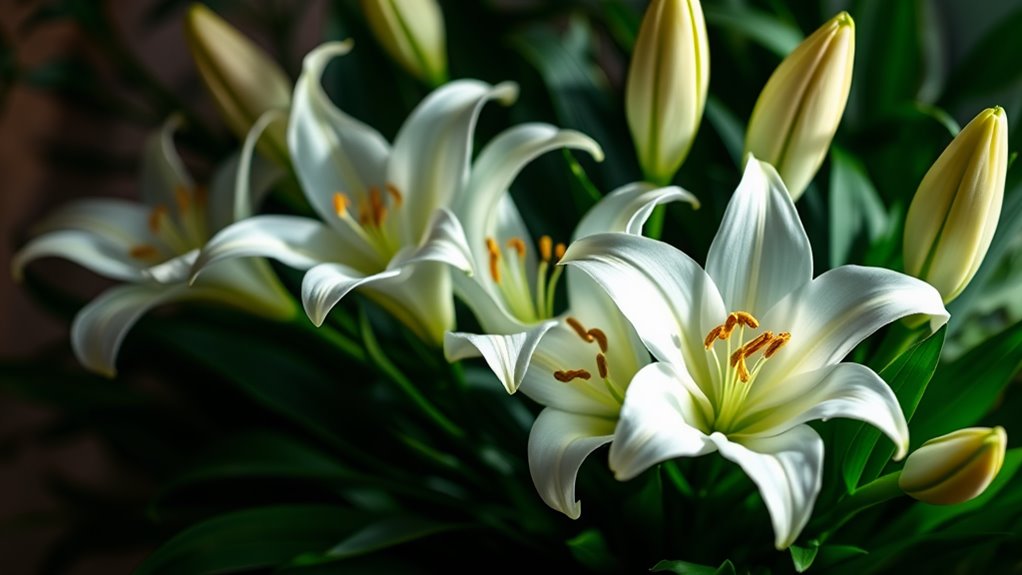
Lilies, with their delicate petals and serene presence, hold profound symbolism in funeral arrangements. You'll find these flowers often represent the restored innocence of the soul of the deceased. Among the lily varieties, the white lily is especially significant, symbolizing purity and virtue, while the stargazer lily offers a sense of sympathy and aspiration towards the divine. Each variety conveys a unique message, deepening the spiritual symbolism inherent in these blooms. When you choose lilies for a funeral, you're selecting a flower that transcends mere beauty. Their presence is a gentle reminder of the spiritual journey, offering comfort and peace. The spiritual symbolism of lilies provides solace, suggesting that the departed has found serenity and purity in their next life. Additionally, personal touches like incorporating the deceased's favorite flowers or colors can add even more meaning to the arrangement, enhancing the memorial experience. Funeral flowers, such as lilies, often have significant meanings that complement the overall symbolism of the service. For those seeking assistance in crafting a meaningful tribute, obituary writing services can offer support in creating heartfelt obituaries and condolence messages.

Roses: A Timeless Tribute to Love and Respect
Few flowers embody the timeless essence of love and respect quite like roses. When you incorporate them into funeral arrangements, they serve as a profound tribute to a cherished individual.
The rich diversity of rose varieties allows you to convey your emotions with precision. Red roses symbolize eternal love and deep respect, making them a popular choice for honoring a beloved. White roses, with their pure elegance, reflect reverence and innocence, offering a serene farewell.
In more personalized funeral arrangements, you might choose yellow roses to signify enduring friendship, or pink roses to express gratitude and admiration. Each variety offers a unique way to articulate your sentiments, ensuring that your tribute is as meaningful as the memories you hold dear. Additionally, eulogy writing services can help you express your emotions through words, offering respectful and meaningful tributes to complement the beauty of your floral arrangements.
The Reverent Meaning of Chrysanthemums
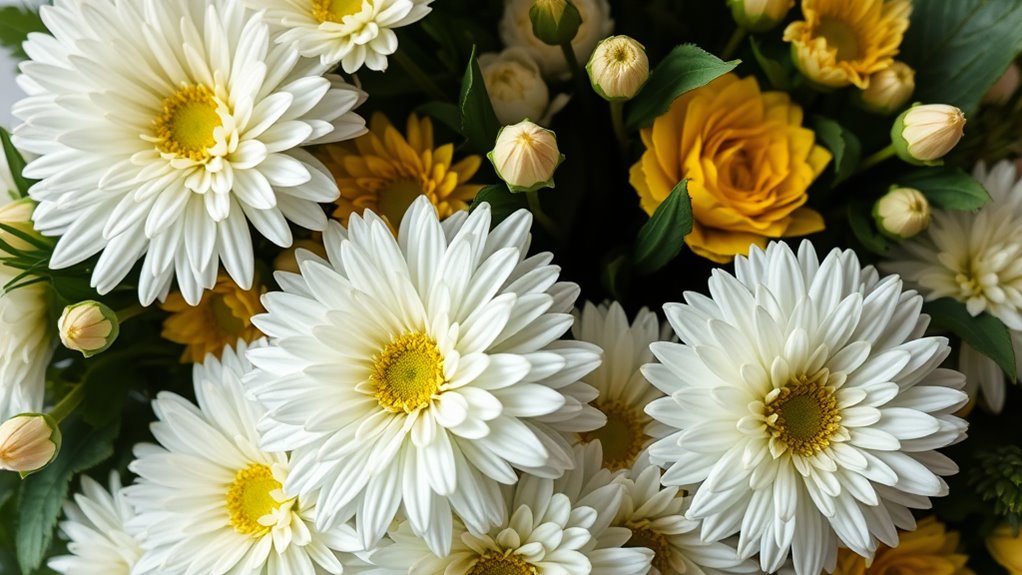
In your exploration of chrysanthemums, you'll discover their profound cultural significance as they grace funeral traditions across continents.
These blossoms, revered for their elegant simplicity, symbolize both a farewell and a celebration of life, embodying themes of honor, grief, and reverence.
As you contemplate their presence, consider how chrysanthemums become a universal language of mourning, bridging diverse customs with their poignant beauty.
Cultural Significance Worldwide
Chrysanthemums, with their vibrant hues and intricate petals, hold profound cultural significance across the globe.
You'll find that their meanings vary greatly due to cultural variations and regional customs. In Asia, particularly Japan and China, chrysanthemums symbolize longevity and rejuvenation, often celebrated during festivals.
Meanwhile, in many European countries, these flowers are associated with mourning and remembrance.
Let's explore their global significance:
- Asia: Viewed as a symbol of the sun, they represent life and rebirth.
- Europe: Commonly used in funerals, they signify sympathy and honor.
- America: Often seen in autumn displays, they embody cheerfulness and abundance.
Understanding these cultural nuances enriches your appreciation of chrysanthemums, revealing their role as a poignant, universal symbol in human expression.
Symbolism in Mourning Traditions
Chrysanthemums hold a unique place in mourning traditions, deeply woven into the fabric of various cultures.
In Europe, they're often seen as symbols of death and are exclusively used in funerals and cemeteries, embodying solemnity and farewell.
Meanwhile, in Asian cultures, chrysanthemums represent rebirth and immortality, offering comfort and hope during mourning rituals.
When you present these flowers, you're engaging in a timeless grief expression, acknowledging sorrow while conveying profound respect.
The flower's layered petals reflect the complexity of human emotions experienced during loss.
As you navigate the intricacies of these rituals, understanding the symbolism of chrysanthemums can deepen your connection to the departed.

The flowers serve as a poignant reminder of life's impermanence and the enduring cycle of renewal.
Carnations: A Reflection of Admiration and Affection
When you choose carnations for a funeral, you're embracing a flower steeped in history, with roots that trace back to ancient Greek and Roman ceremonies.
Each hue tells its own poignant story: white carnations symbolize pure love and innocence, while pink ones express remembrance and gratitude.
You'll often find these blooms in wreaths and sprays, their timeless beauty a tender tribute to admiration and affection for those who've passed.
Historical Significance of Carnations
Though often overshadowed by their more flamboyant floral counterparts, carnations have long held a unique place in history as symbols of admiration and affection. Their historical uses span centuries, enriching various cultures with their delicate charm.
You'll find carnations woven into the fabric of different societies, each paying homage to their beauty in distinctive ways. Consider these intriguing historical and cultural variations:
- Ancient Greece: Carnations were used in ceremonial crowns, embodying divine love and admiration for deities.
- Victorian England: They became a staple in expressing sentiments through the "language of flowers," with each color conveying a specific message.
- Korean Culture: Carnations are traditionally a symbol of filial piety, often given to parents on special occasions.
Their timeless appeal continues to evoke deep emotions.
Symbolic Colors and Meanings
Carnations, with their delicate ruffled petals, offer a language of their own through their vibrant hues, each color carrying an intricate story of admiration and affection.
Pink carnations symbolize a mother's eternal love, resonating deeply with those who cherish familial bonds. Their gentle blush contrasts with the fiery passion of red roses, while yellow lilies stand as emblems of friendship and renewal.
The ethereal purity of white chrysanthemums conveys sincere condolences and reverence. Purple orchids, with their exotic elegance, represent dignity and respect.
Imagine blue flowers whispering tranquility, their serene tones calming the spirit. Each color weaves its narrative, inviting you to express emotions that words might fail to capture.
In this floral tapestry, carnations remain a poignant tribute to heartfelt sentiments.
Popular Funeral Arrangements
In the domain of popular funeral arrangements, carnations hold a place of honor, reflecting admiration and affection through their charming presence. Their vibrant colors and delicate petals capture emotions that words often can't express.
You might choose carnations for several reasons:
- Wreath Arrangements: These circular tributes symbolize eternal life. Carnations, with their long-lasting nature, make them perfect for this enduring gesture.
- Color Variety: Red carnations signify admiration, white denote pure love, and pink represent remembrance, allowing you to personalize your floral tributes meaningfully.
- Affordability: Carnations offer an elegant yet economical choice, letting you express heartfelt sentiments without compromising on beauty.
Orchids: A Gesture of Eternal Remembrance
Elegance defines orchids, making them a poignant symbol of eternal remembrance in funeral rituals. Their exotic beauty and diverse orchid varieties offer a unique touch to floral arrangements, conveying love and admiration. Whether it's the delicate Phalaenopsis or the vibrant Dendrobium, orchids honor the memory of a loved one with grace.
Incorporate them into your arrangements to create a lasting tribute. Here's a quick guide:
| Orchid Variety | Symbolism | Arrangement Tip |
|---|---|---|
| Phalaenopsis | Love and Beauty | Use as a centerpiece |
| Dendrobium | Harmony | Mix with greenery |
| Cattleya | Refined Elegance | Pair with white roses |
| Cymbidium | Strength | Add to cascading sprays |
| Oncidium | Joyful Remembrance | Include in wreaths |
Choose orchids to express profound respect, creating a serene atmosphere for reflection.
The Significance of Hyacinths in Mourning Rituals
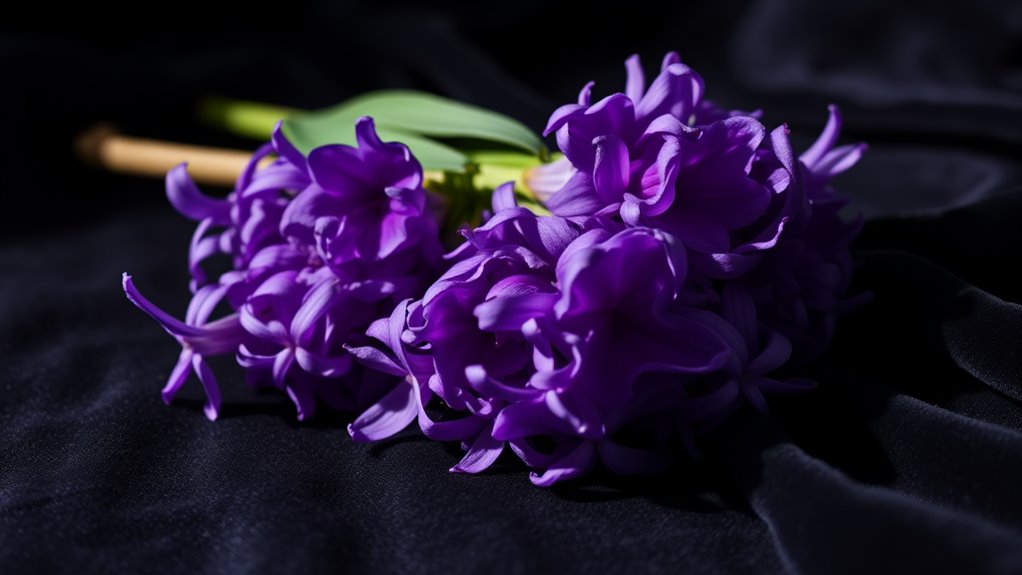
Amidst the array of funeral flowers, hyacinths stand out for their profound symbolism of sorrow and deep reflection.
These blooms, with their gentle curves and sweet fragrance, offer a delicate expression of grief.
When choosing hyacinth arrangements for a funeral, consider the impact of hyacinth colors. Each hue carries a unique message:
- Purple Hyacinths: Represent sorrow and forgiveness, ideal for expressing deep sympathy.
- White Hyacinths: Symbolize purity and peace, offering comfort during times of loss.
- Pink Hyacinths: Convey admiration and love, perfect for honoring cherished memories.
Conclusion
In your journey through the symbolic language of funeral flowers, you'll discover that each bloom carries a profound message. Did you know that 90% of people believe flowers offer comfort in times of grief? This shows how deeply rooted these traditions are in our hearts. Lilies express peace, roses embody eternal love, and chrysanthemums signify reverence. Carnations, orchids, and hyacinths each add their unique touch, weaving a tapestry of remembrance and heartfelt emotion.