If you're wondering who's responsible for making funeral arrangements, it often starts with the legal next of kin, such as a spouse or adult child. They generally handle selecting the funeral home and organizing the ceremony. If a will is present, the executor has significant duties like fulfilling the deceased's wishes and managing financial aspects. Immediate family members typically provide essential support, with professional funeral directors guiding you through complex logistics and legal documentation. Cultural and religious considerations also play vital roles. Learning more about each can help alleviate stress during this challenging time.
Legal Next of Kin

In the context of funeral arrangements, understanding who the legal next of kin is becomes paramount. As the next of kin, you hold significant next of kin rights and legal responsibilities. This designation often falls to the closest living relative, such as a spouse, adult child, parent, or sibling. Knowing your position in this hierarchy guarantees you can fulfill your obligations effectively.

Your rights as the legal next of kin include making critical decisions about the deceased's funeral arrangements. You'll be responsible for choosing the funeral home, planning the ceremony, and determining the final resting place. These decisions require both sensitivity and a deep understanding of the deceased's wishes and cultural or religious considerations, such as specific funeral flower arrangements.
Being the legal next of kin also means you have legal responsibilities. You must handle essential paperwork, such as death certificates, and coordinate with other family members and professionals involved. These tasks can be emotionally taxing, but they're essential for a smooth process.
Executor of the Will
Serving as the executor of the will is a role that carries immense responsibility and trust. If you've been named the executor, you'll need to navigate a myriad of executor duties and executor responsibilities, particularly when it comes to making funeral arrangements. Your primary duty is to guarantee the decedent's wishes, as stated in the will, are honored. This often includes liaising with funeral homes, coordinating with other service providers, and managing the financial aspects of the arrangements.
Firstly, you'll need to locate and review the will to understand any specific requests regarding the funeral. This includes considering whether the decedent preferred burial vs. cremation options. It's vital to communicate effectively with family members and other stakeholders to guarantee everyone is on the same page.
You're responsible for securing necessary permits, certificates, and authorizations, which can be overwhelming without proper organization.
Additionally, executor responsibilities extend to managing the estate's finances. You may need to access the decedent's bank accounts to pay for funeral expenses. This requires presenting the death certificate and proof of your role as executor.
Always keep detailed records of all transactions and communications to guarantee transparency and accountability.
Family Members' Roles

When it comes to funeral arrangements, family members' roles are vital in ensuring a smooth and respectful process. Each family member can contribute in various ways, depending on their strengths and the family dynamics. It's important to communicate openly and delegate tasks to avoid unnecessary stress and conflicts.

First, consider the immediate family. They often take the lead in planning, offering both logistical and emotional support. You might find that siblings, parents, and children have different perspectives, but their collective input can be invaluable. For example, one person could handle contacting relatives, while another manages financial aspects. If needed, they might also seek affordable obituary writing services to ease the burden of writing a meaningful tribute.
Extended family members also play a significant role. Cousins, aunts, and uncles can provide additional emotional support and help with various tasks, such as writing the obituary or organizing meals for gatherings. Their involvement can ease the burden on the immediate family, making the process more bearable.
Professional Funeral Directors
Professional funeral directors play an essential role in managing the complexities of funeral arrangements. When faced with the emotional and logistical challenges of planning a funeral, you'll find that a funeral director's expertise is invaluable. Their primary responsibilities include guiding you through selecting funeral services, guaranteeing all legal documentation is completed, and coordinating with various service providers.
A funeral director helps you make informed decisions about essential aspects such as choosing between burial and cremation, selecting a casket or urn, and arranging transportation for the deceased. They also manage the scheduling and location of the service, liaising with clergy or officiants, and guaranteeing that all cultural or personal preferences are respected.
Moreover, they handle the delicate task of preparing the deceased for viewing, including embalming, dressing, and cosmetology, if desired. Their empathetic approach and attention to detail guarantee that every element is addressed with care and respect.
Throughout the process, they maintain clear communication, providing you with options and recommendations tailored to your needs. By entrusting these responsibilities to a professional funeral director, you can focus on grieving and honoring your loved one's memory, knowing that the logistical aspects are in capable hands.
Cultural and Religious Factors
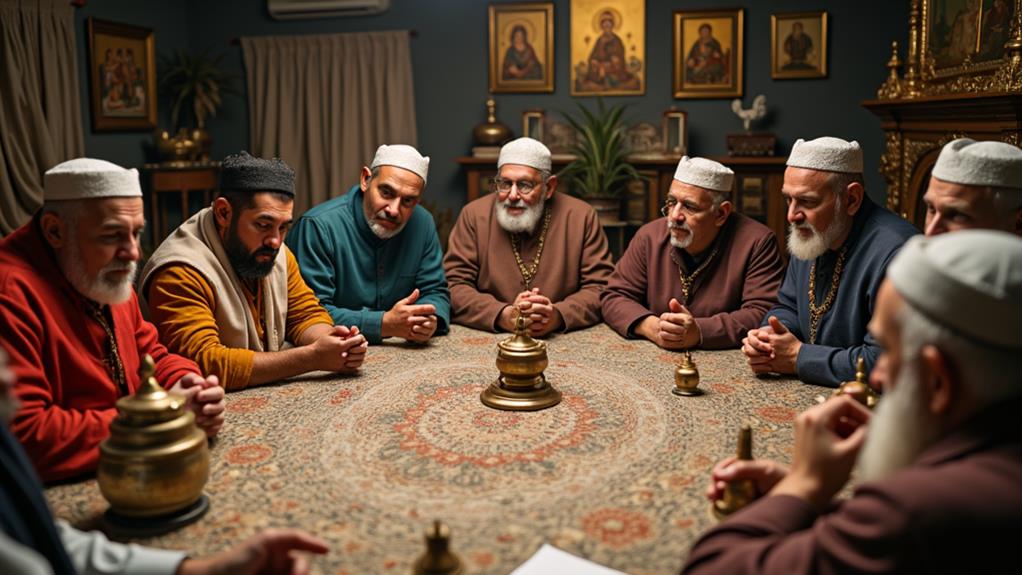
Maneuvering funeral arrangements often involves understanding and respecting various cultural and religious factors. Each culture has its own unique traditions, and religious practices can greatly influence how you approach planning a funeral. It's vital to recognize these elements to guarantee that the ceremony honors the deceased in a manner that aligns with their beliefs and heritage.
For instance, some cultural traditions may dictate specific rituals, such as the viewing of the body, the type of clothing the deceased should wear, or the use of particular objects or symbols during the service.
Religious practices can also determine the proceedings, from the recitation of prayers and hymns to the method of burial or cremation. In some faiths, the timeline for conducting these rituals is critical, requiring immediate action.
Understanding these nuances allows you to navigate the planning process with respect and sensitivity. Collaborating with family members and religious leaders can provide you with invaluable guidance.
Confirming you adhere to these cultural and religious factors not only offers comfort to grieving loved ones but also honors the legacy of the departed. Balancing these elements with logistical considerations will help create a meaningful and respectful farewell.
Conclusion
In traversing the solemn path of funeral arrangements, you'll find that the responsibility often falls to the legal next of kin, the executor of the will, or family members. Professional funeral directors can guide you like a lighthouse in a storm. Each role is crucial, influenced by cultural and religious factors. With empathy and attention to detail, you can honor your loved one's memory, ensuring their final journey is handled with the utmost care and respect.